Knee Pain: Common Causes, Warning Signs, and When to See an Orthopedic Doctor
The first step to getting the right care for your knee pain is figuring out what’s causing it. Knee pain can happen at any age, whether you are an active adult with a sports injury or an older adult experiencing joint stiffness or age-related wear and tear. If you have knee pain that is making it difficult to walk, climb stairs, stand for extended periods of time, or engage in day-to-day activities, an assessment by an orthopedic doctor can determine what is going on and if treatment is necessary. Patients seeking knee pain treatment in Indore should prefer treatment as per the accurate diagnosis instead of treating all types of knee pain in the same way.
Why Does the Knee Hurt?
The knee is a complicated joint, created by the meeting of the thighbone, the shinbone, and the kneecap. Cartilage allows the joint surfaces to glide smoothly, while ligaments, tendons, and muscles support and stabilize the joint. If one or more of these structures becomes irritated, injured, inflamed, or damaged, pain can result.
Being aware of the exact location of the discomfort, its onset, any swelling in the joints, and the specific movements that trigger it can greatly assist in diagnosing the issue. But physical symptoms do not tell the whole story. A thorough clinical examination and possibly specific tests such as X-rays or MRI scans may be advised to reach a definitive diagnosis.
Common Causes of Knee Pain
1. Osteoarthritis of the Knee
Osteoarthritis is a common cause of ongoing knee pain, particularly as people get older. It involves changes in the joint, including gradual loss of protective cartilage. Symptoms may include pain during walking or stair climbing, stiffness after resting, swelling, and reduced movement. In more advanced cases, pain may also occur at rest or interfere with sleep.
Treatment depends on symptom severity, examination findings, and how much daily life is affected. A doctor may discuss weight management where appropriate, activity modification, physiotherapy, medicines, or other options. Knee replacement may be considered for selected patients with advanced joint damage and persistent symptoms despite suitable non-surgical care.
2. Ligament Injuries
Knee ligaments act as stabilizers that connect the bones within the joint. High-impact movements or sudden shifts in direction during sports, such as abrupt twists, awkward landings, or direct collisions, can strain or tear key ligaments like the anterior cruciate ligament (ACL) or medial collateral ligament (MCL). Common indications of a ligament tear include an audible popping sound, acute pain, localized swelling, or a feeling of joint instability. Because severity ranges from mild sprains to complete tears, a formal medical evaluation is essential before resuming athletic training or strenuous exercise.
3. Meniscus Tears
The menisci are two pieces of cartilage that help distribute load and absorb shock inside the knee. A tear can occur during a twisting movement, particularly in sport, or develop gradually with age-related changes. Symptoms may include pain along the joint line, swelling, catching, difficulty bending the knee, or a sensation that the knee locks. Some meniscus injuries can be managed without surgery; others may need further specialist assessment.
4. Tendon Problems and Bursitis
Repetitive strain, frequent kneeling, or a sudden ramp-up in exercise can lead to inflammation in the tendons or bursae, the small, fluid-filled cushions surrounding the knee joint. This often manifests as tenderness and pain around the front, top, or base of the kneecap that intensifies during specific movements. Managing this condition effectively requires targeted care based on the specific tissue affected and its root cause.
5. Fractures and Other Injuries
Knee fractures involving the patella or surrounding bone structures typically stem from high-impact trauma, such as a direct blow, traffic collision, or fall. Key indicators include severe pain, visible deformity, localized bruising, marked swelling, and an inability to bear weight on the affected leg. Immediate medical evaluation is crucial; avoid attempting to move the joint or walk on an injured knee.
6. Inflammation, Infection, or Other Medical Conditions
Not all knee issues stem from wear and tear or mechanical injuries; some are caused by inflammatory conditions, crystal-related arthritis, or infections. Immediate medical attention is essential for a knee that is hot, red, and swollen, particularly when accompanied by fever or a general feeling of illness, to rule out a serious joint infection. Likewise, any sudden onset of pain or swelling without an obvious injury warrants evaluation by a doctor.
Warning Signs: When Should You See an Orthopedic Doctor?
If knee discomfort persists, recurs frequently, or begins interfering with your daily routine, scheduling a professional evaluation is essential. You should seek medical guidance for the following warning signs:
- Pain that continues or worsens despite resting or reducing aggravating activities.
- Joint stiffness, swelling, or limited range of motion in flexing or extending the leg.
- Sensations of joint instability, giving way, or catching.
- Trouble walking, putting weight on the leg, or navigating stairs.
- Discomfort triggered by a traffic collision, athletic injury, or fall.
Immediate emergency care is necessary if you experience acute sudden swelling, physical joint deformity, severe pain preventing weight-bearing after trauma, or a hot, reddened joint accompanied by a fever. Do not wait for a routine appointment when dealing with sudden, acute symptoms.
How Is the Cause of Knee Pain Diagnosed?
During an initial orthopedic assessment, the physician typically inquires about the pain's onset, exact site, aggravating or relieving factors, and any history of trauma. The evaluation generally includes checking the patient's gait, structural alignment, localized tenderness, joint stability, swelling, and range of motion. Prior injuries, underlying medical conditions, current medications, and overall activity levels are also reviewed.
Diagnostic imaging is utilized when necessary to establish an accurate diagnosis or formulate a management plan. Radiographs (X-rays) effectively evaluate joint space narrowing and bone structure, whereas magnetic resonance imaging (MRI) provides detailed views of soft-tissue structures such as ligaments and menisci. Diagnostic testing is tailored to individual clinical requirements.
Knee Pain Treatment: What Are the Options?
Care plans for managing knee discomfort are tailored based on individual factors such as specific diagnosis, condition severity, patient age, general health status, activity goals, and personal preferences. Potential management strategies include the following:
- Adjusting physical activity levels and progressively introducing motion.
- Participating in targeted physical therapy alongside guided exercises to enhance strength and mobility.
- Utilizing prescribed medications or other symptomatic relief measures recommended by a medical provider.
- Employing supportive orthotic devices or secondary interventions suited for specific conditions.
- Undergoing surgical procedures, such as arthroscopy, for particular structural injuries when clinically indicated.
- Evaluating suitability for knee replacement surgery in individuals experiencing advanced joint damage alongside persistent symptoms.
Surgical intervention is not mandatory for every case of knee pain. Prior to proceeding with any procedure, patients should engage in a detailed discussion with an orthopedic specialist to evaluate anticipated benefits, potential risks, non-surgical alternatives, and rehabilitation requirements.
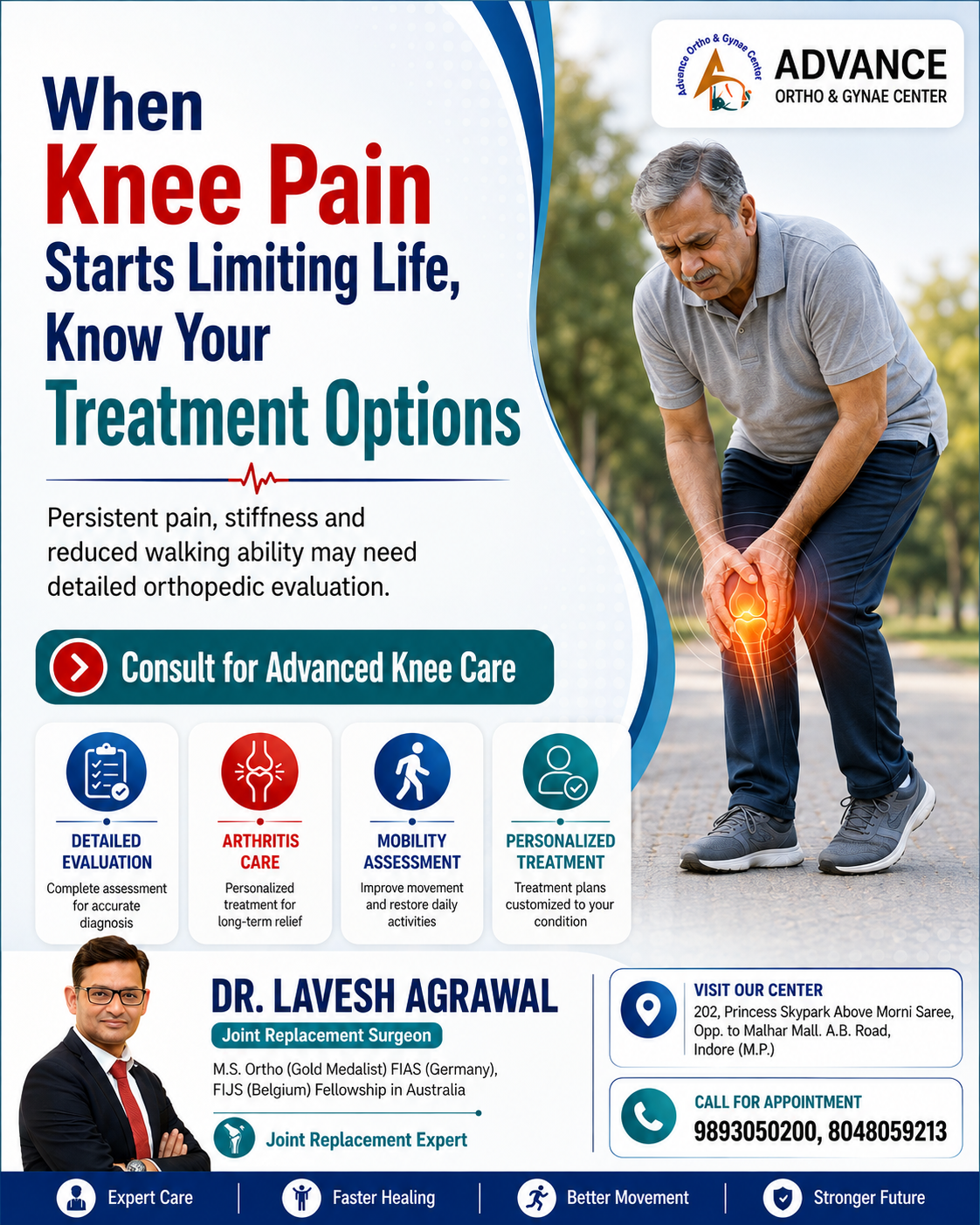
Orthopedic Knee Care at Advance Ortho & Gynaec Center, Indore
Advance Ortho & Gynaec Center in Scheme No. 54, near Vijay Nagar, Indore, lists orthopedic services including joint replacement, fracture and trauma care, sports injury assessment, arthroscopy, and spine-related treatment. Dr. Lavesh Agrawal’s clinic profile identifies joint replacement among his areas of special interest. Patients with knee pain can consult the clinic to discuss their symptoms, review previous reports, and determine whether further assessment or treatment is appropriate.
Bring any previous X-rays, MRI reports, prescriptions, or discharge summaries to the appointment. It can also help to note when the pain began, which activities trigger it, and whether swelling, locking, or instability has occurred.
Arrange an Orthopedic Consultation in Indore
If knee pain is affecting your mobility or daily routine, seek an assessment to understand its cause and the treatment options available. Contact Advance Ortho & Gynaec Center to enquire about an appointment with Dr. Lavesh Agrawal.
Clinic address: No. 202, Princes Business Sky Park, Scheme No. 54, Near Vijay Nagar, Opposite C21 Mall, AB Road, Indore, Madhya Pradesh 452010.
Keywords